 Regional Arts WA
Published on
Regional Arts WA
Published on
Arts and culture play a vital role in regional Western Australia; strengthening community connection, supporting local economies, and sustaining cultural knowledge across generations. Yet the workforce driving this impact remains largely invisible and is increasingly under strain.
Regional arts organisations are often small to medium not-for-profits with limited resources and minimal paid staffing. Without sustained investment in workforce pathways, the sector faces ongoing skills shortages, burnout, and the loss of local expertise; limiting its ability to meet growing community needs.
Addressing this gap and supporting emerging arts workers is critical to building resilient organisations and supporting sustainable arts careers in the regions.
Establishing New Opportunities
The Outback Prac Program, developed by Regional Arts WA, responds to this challenge by enabling structured, supported placements that connect student learning with regional needs. Regional Arts WA works with universities and regional arts organisations to broker Work Integrated Learning (WIL) placements and coordinate logistics, reducing risk and administrative burden for host organisations, while providing financial support to enable participation.
In collaboration with the Bachelor of Arts (Arts and Cultural Management) course at Edith Cowan University/WA Academy of Performing Arts (ECU/WAAPA) and the Regional Arts Network, the program has supported eight ECU student placements across regional WA since 2024:
- Goolarri Media Enterprises, Broome
- The Junction Co., Port Hedland
- Arts Narrogin, Narrogin – two placements
- Denmark Arts, Denmark
- The Cannery Arts Centre ,Esperance
- Gardiner Street Arts Collective, Moora
- Arts Margaret River, Margaret River
Insights and Learnings
These placements have strengthened student capability, expanded organisational capacity, and demonstrated the value of place-based training as a practical, scalable approach to workforce development.
Recent research with the tertiary education sector in WA led by Regional Arts WA, shows strong student demand for regional experience, yet most WIL models are designed for metropolitan contexts. They often do not accommodate the realities of regional and remote practice.
The Outback Prac Program is purpose-built for the geographical challenges experienced across regional Western Australia. It recognises that effective workforce development requires intentional coordination, resourcing, and place-based engagement. By addressing these barriers, the program enables equitable participation while ensuring host organisations are supported.
A key feature is direct financial support for travel, accommodation, and community-based work costs, helping offset rising expenses and reducing barriers for students without personal financial means.
As Dr Chris Scoggin, Lecturer and Academic WIL Coordinator at WAAPA/ECU, notes:
“The Outback Prac Program has made a valuable contribution to student learning, professional skill development and regional engagement… These placements would not have been possible without the funding, coordination and support provided by RAWA and host organisations.”
Host organisations report increased capacity for program delivery, upskilling with students sharing their learnings, and meaningful support in day-to-day operations, whilst expressing genuine excitement in contributing to graduate employability. A key benefit is the opportunity for students to experience firsthand the important role arts organisations play in regional communities.
Student Experiences
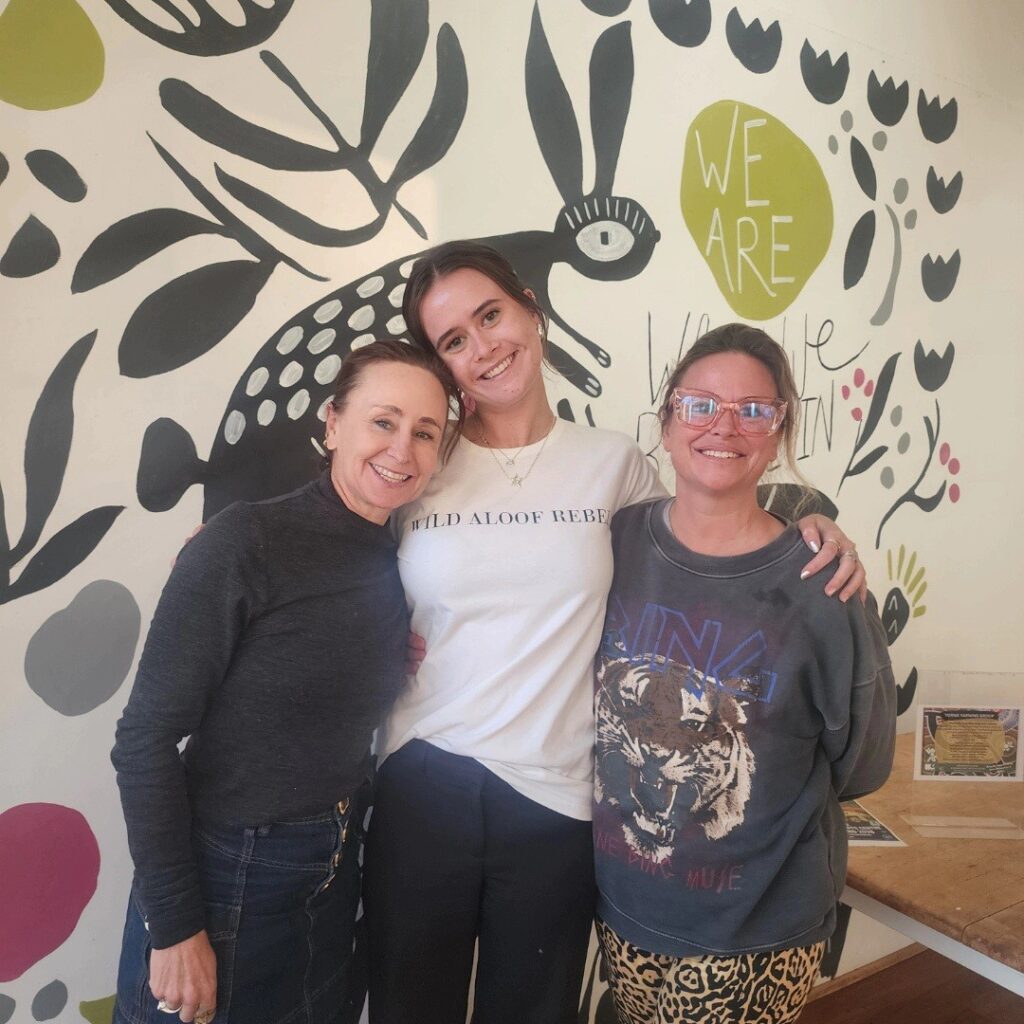
Student feedback reinforces this impact. Lily Probert described her placement at Arts Narrogin as:
“…one of the most rewarding and transformative experiences of my studies to date. Having previously completed several placements throughout my degree, this opportunity stood out not only for the variety of hands-on learning opportunities it provided, but also for the deep sense of community, care and collaboration that surrounded the work.
I cannot recommend the Regional Arts WA Outback Prac Initiative highly enough. Opportunities such as this are invaluable for emerging arts workers and provide experiences that would simply not be possible in many city-based placements. The funding provided for travel, accommodation and living costs made the placement accessible and allowed me to fully immerse myself in both the experience and the community.”
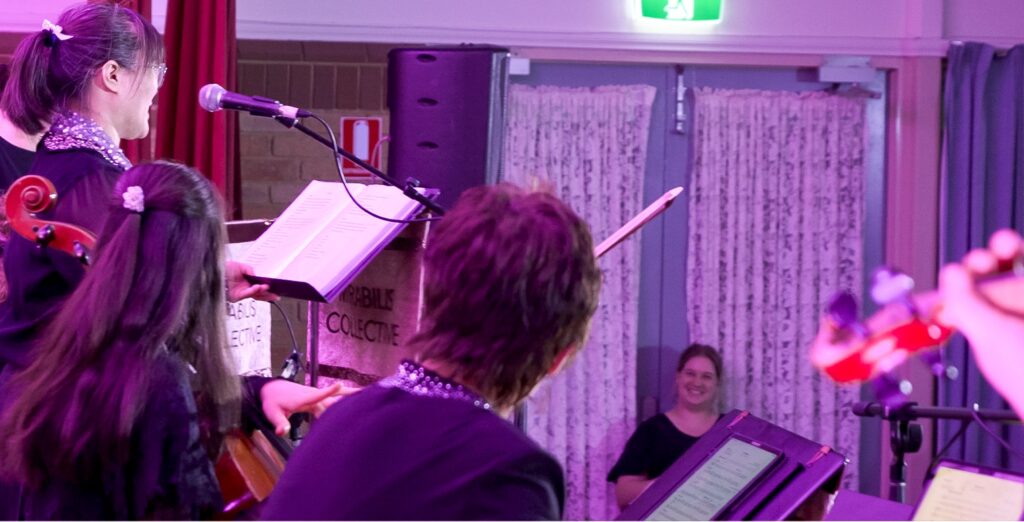
Student Lucy Tobin reflected on how the experience at The Junction Co. in Port Hedland reshaped her understanding of regional arts practice:
“I was really intrigued by how an arts centre could operate in what I knew as a mining town… what I found was passion and care for the community and a willingness to create unique opportunities for residents to encounter art.”
More to Come
Overall, the Outback Prac Program has demonstrated how targeted investment, cross-sector collaboration, and place-based design can strengthen the arts workforce and deliver lasting benefits for regional communities.
Regional Arts WA intends to continue the program into 2027 and beyond. Expanding the program with Curtin University, University of Western Australia and other tertiary education providers will continue. It also has plans to facilitate graduate pathways into regional arts organisations, transferring learning experiences into regional jobs and deepening sector and community impacts.
Thanks to Collaborators and Partners
The Outback Prac Program is proudly delivered by Regional Arts WA, in collaboration with the Regional Arts Network and Edith Cowan University WAAPA, and supported by the Regional Arts Fund, The Ian Potter Foundation, and in partnership with Minderoo Foundation for the Thrive! Framework.
The Regional Arts Fund is an Australian Government program that supports sustainable cultural development in regional and remote communities in Australia. The Regional Arts Fund is managed by Regional Arts Australia on behalf of the Australian Government.
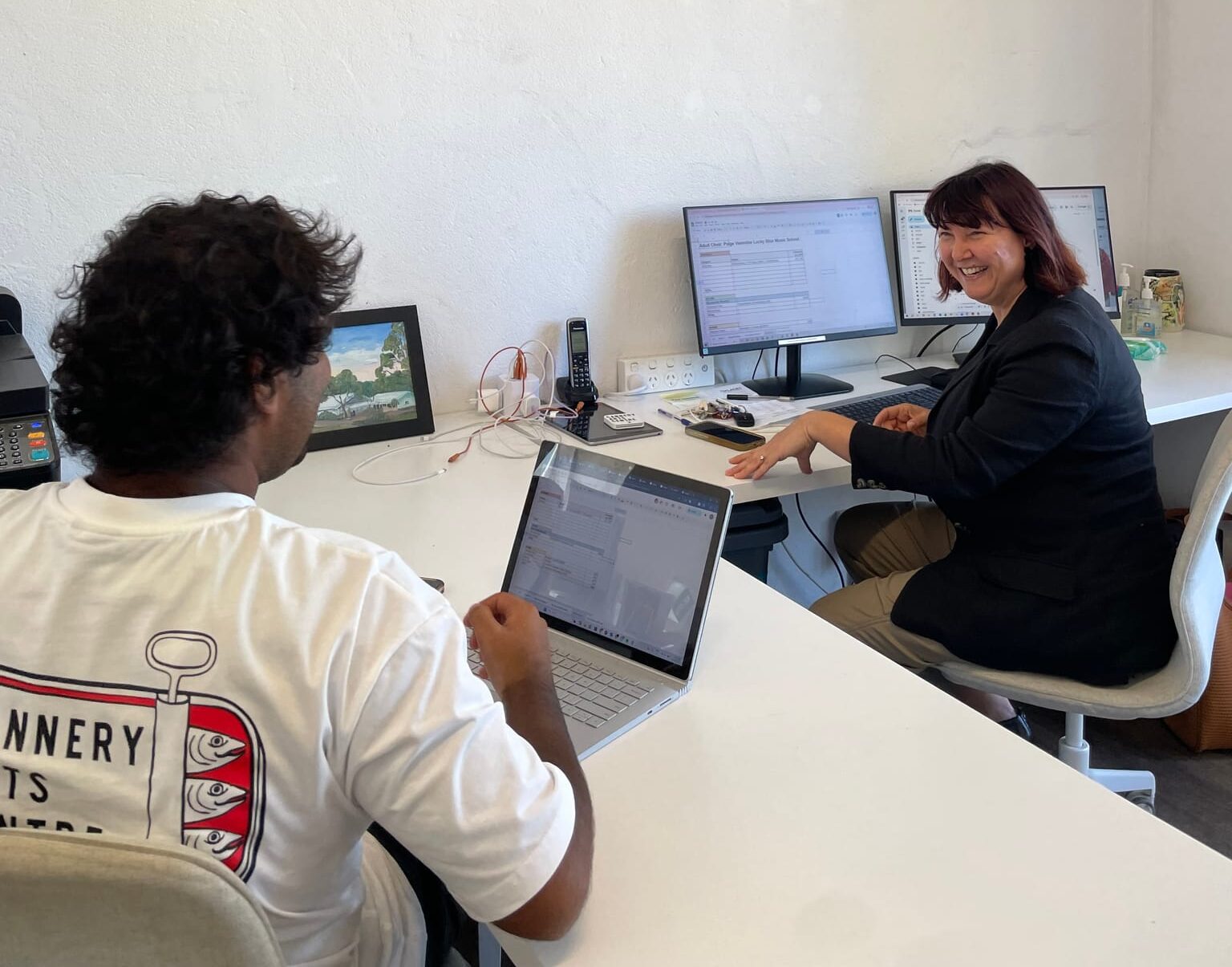
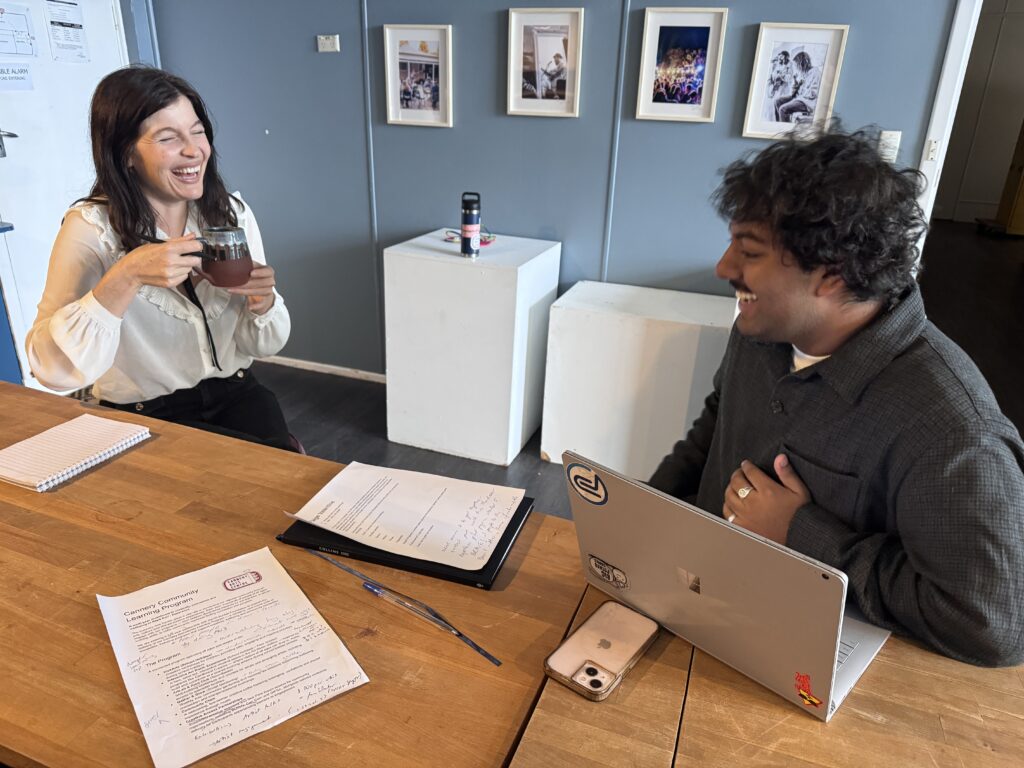
Cover image: ECU/WAAPA student Mahaan Gandhi with General Manager Katie Witt, at The Cannery Arts Centre Esperance, April 2026. Photos courtesy of The Cannery Arts Centre.
Posted in Initiatives, News & Stories, Regional Arts Network.