 Sophie Mathewson
Published on
Sophie Mathewson
Published on
Summer has a way of softening the edges of this enormous state. The roads shimmer, the towns exhale, and if you point your car just about anywhere outside the city limits, you’ll find art waiting for you in the open.
If you find yourself behind the wheel this summer, looking for a piece of inspiration holding its ground against heat, wind, red dirt, sea, salt, and time, here are ten art encounters to keep up your sleeve.
1. The Giants of Mandurah
If you’ve got kids who still believe in magic – or if you’re one of those adults who secretly never stopped… this one’s for you.
The Giants of Mandurah are supersized wooden sculptures scattered across the Peel region, each one built from recycled timber by Danish artist Thomas Dambo. They’re whimsical, they’re enormous, and if you grew up watching The Dark Crystal or Labyrinth, they give off an air of Jim Henson.
Finding them is also part of the experience. The sculptures are designed as a kind of treasure hunt that takes you through the beautiful, diverse landscapes of Bindjareb Noongar country.
2. Wardandi Boodja – Bunbury
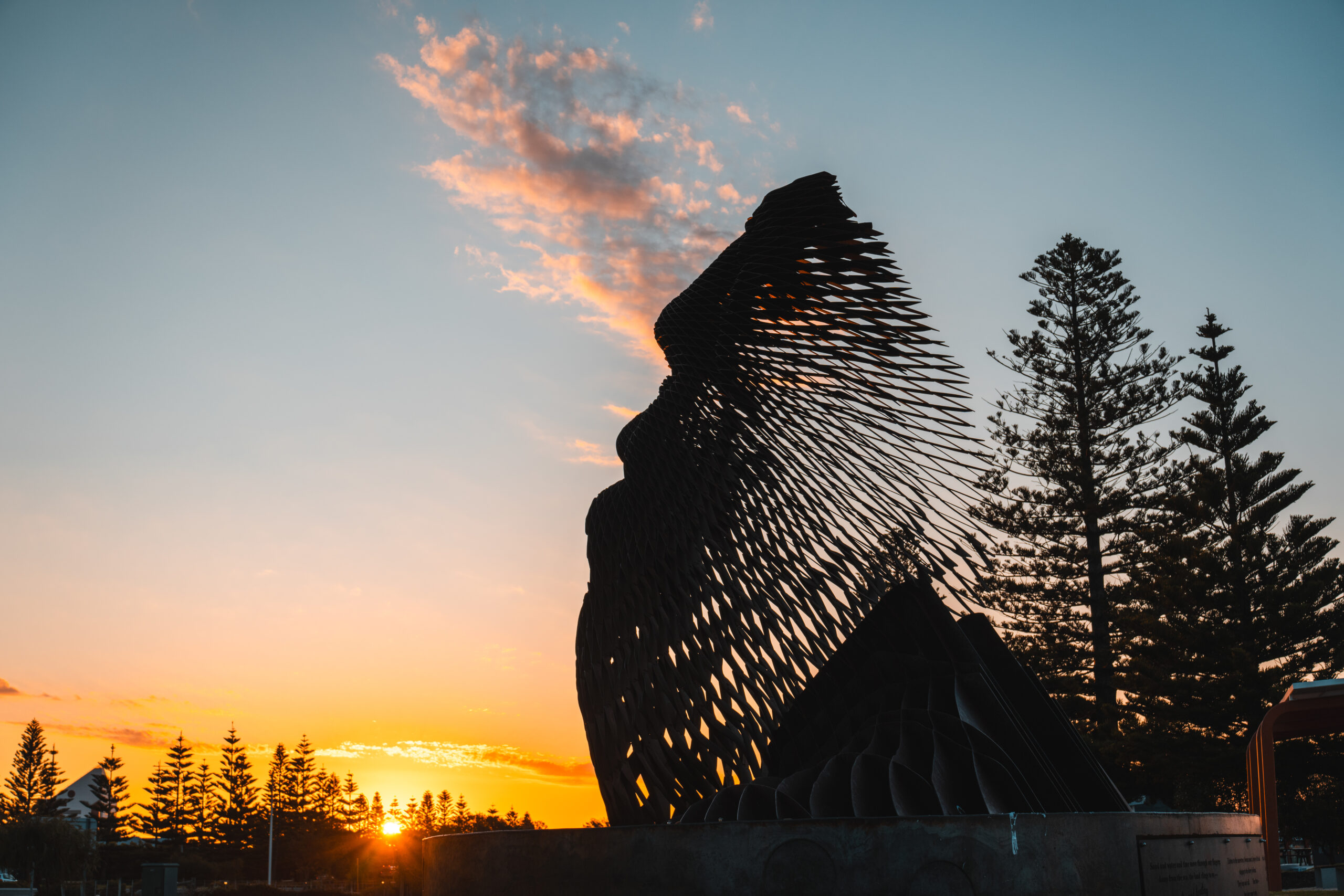
A giant head rises to the sky on the Bunbury foreshore, at Koombana Bay. Five metres high, six metres wide, it’s impossible to miss, really.
His gaze is fixed. Perhaps he knows more than those who come to look. This public sculpture is Wardandi Boodja, a composite face drawn from the features of Noongar Elders, the ones who shaped this coastline long before anyone thought to build wharves or car parks.
Nicole and Alex Mickle, both from regional WA, worked with photographs spanning the 1870s to the early 1900s, alongside contemporary portraits. The result is a face that carries the weight of generations.
Unveiled in 2019, Wardandi Boodja now watches over the bay. And if you find yourself driving through Bunbury this summer, he’s worth pulling over for. Worth the silence that follows, too.
3. Geraldton Public Art Trails
Walk the streets of Geraldton and you’ll find art spilling out of laneways, splashed across basketball courts, and climbing up brick walls in bold, unapologetic colour.
The city wears its commitment to the arts openly. Murals are everywhere – some massive, some tucked away – each one a testament to the creative energy pulsing through this coastal town.
If you want to experience it properly, join the Urban Art Trail, a guided journey through Geraldton’s most iconic murals and hidden gems. Tours start beneath the Fig Tree on the deck outside Regional Sounds, and from there, you’ll explore the stories, artists, and culture that bring these streets to life.
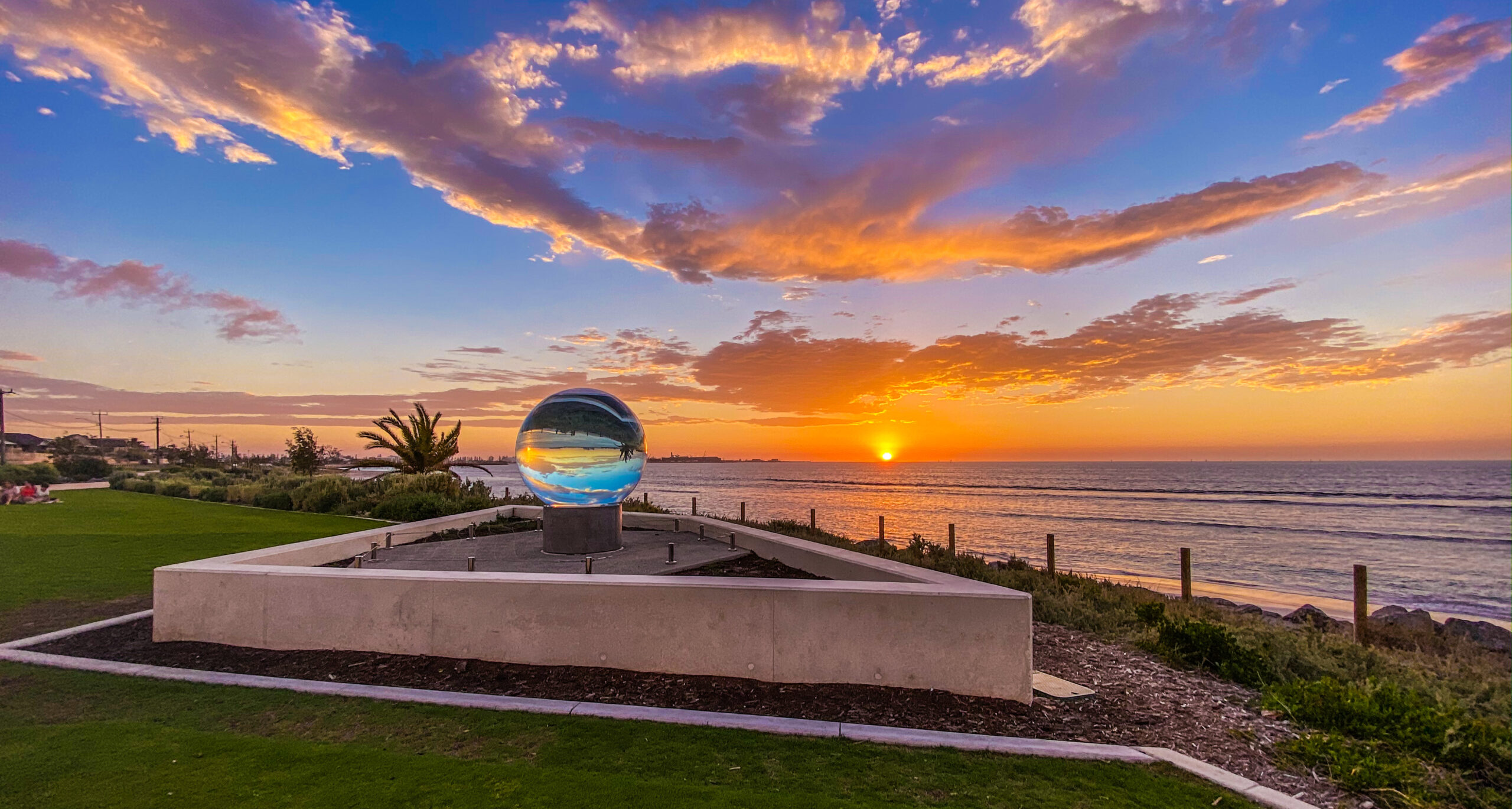
Beyond the trail, Geraldton is home to an extensive collection of public artworks. Pieces like Horizon, Lucy Humphrey’s magnificent 2019 orb-like sculpture down on the foreshore.
Whether you’re here for a weekend or just passing through, give yourself time to wander. The full Public Art Trail Map can be found here.
4. Understory – Northcliffe
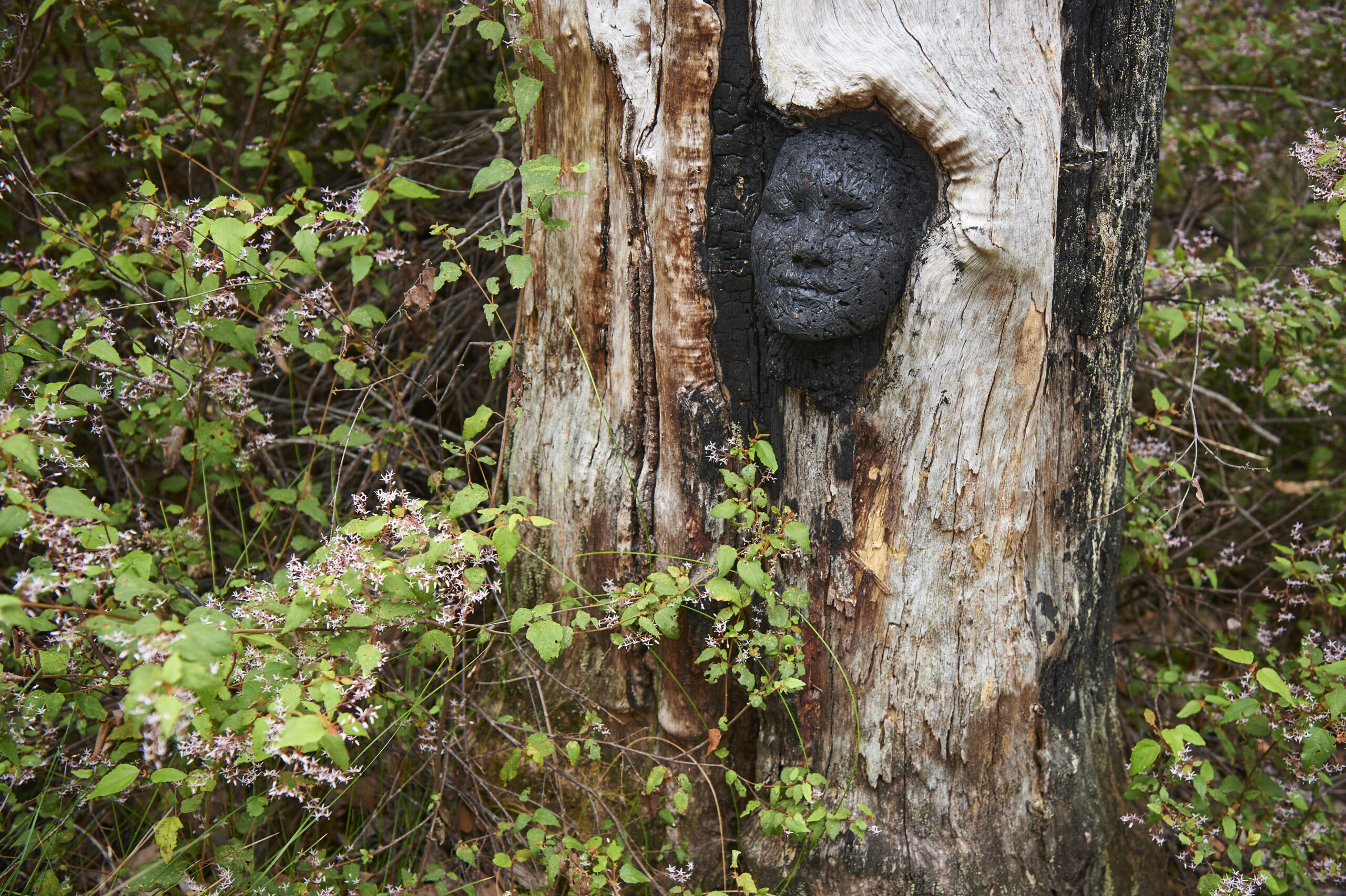
Deep in the karri forest near Northcliffe, art emerges from the forest floor and leans against ancient trunks.
Understory is a 1.2km walking circuit through native forest where sculptures appear like unexpected gifts along the path.
Every artist, writer and musician who contributes spends time in Northcliffe first, developing work that responds to this specific place. Some draw inspiration from spirituality, while others celebrate creativity, life cycles, and the deep geological histories layered beneath the canopy.
The project began as a grassroots initiative by local artists Fiona Sinclair and Peter Hill, who’d previously contributed to ephemeral art trails across the South West highlighting ecosystems under threat. What they discovered was that people were hungry for art encountered outside traditional gallery contexts, and for experiences that could reconnect them with wonder in the natural world.
Stop past Northcliffe for this magical experience. You’ll discover that every artwork here is as rooted in this place as the karri trees themselves.
5. Whale Mural – Busselton Jetty
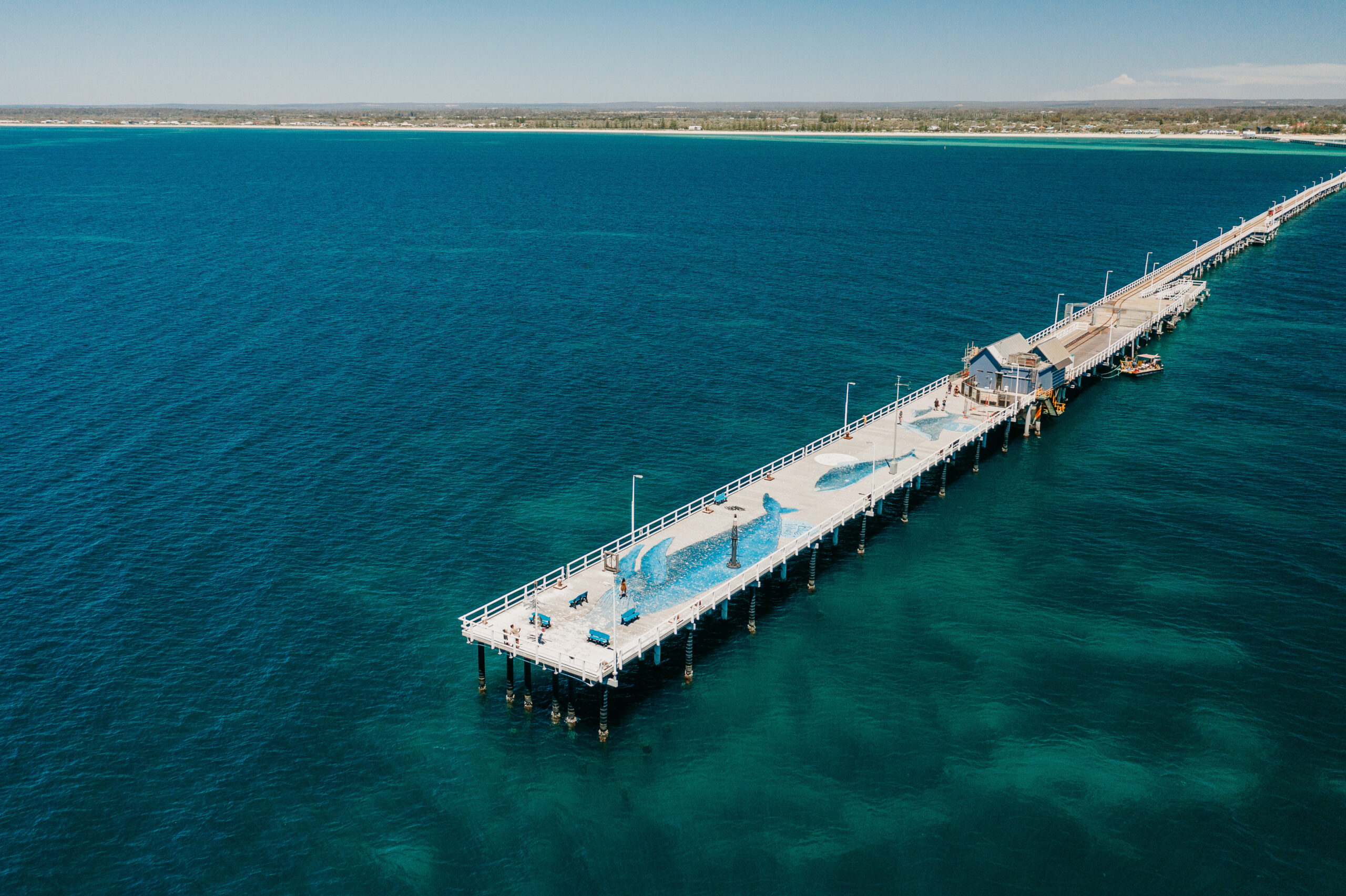
On the worn wooden planks at the end of Busselton Jetty, the long, heritage-listed pier stretching out over Geographe Bay, you’ll find life-size paintings of whales: a blue whale, a humpback whale with calf, and a southern right whale.
Painted in 2015 by local artist Ian Mutch, these are full-scale reminders of the gigantic marine life that swim just below the jetty.
Walk the length of the jetty, then look down at the mural, and you’ll suddenly understand, in that quiet, chest-tightening way, just how enormous whales actually are. The sort of humbling that reminds you there’s a whole world beneath the surface you’ll never fully know.
The mural’s cleverly both artwork and education. If you go: try to visit at low tide or during quiet hours, maybe at sunrise or sunset when the wood glows, and you might just see a real whale on the horizon.
6. Silo Trail – Wheatbelt & Beyond
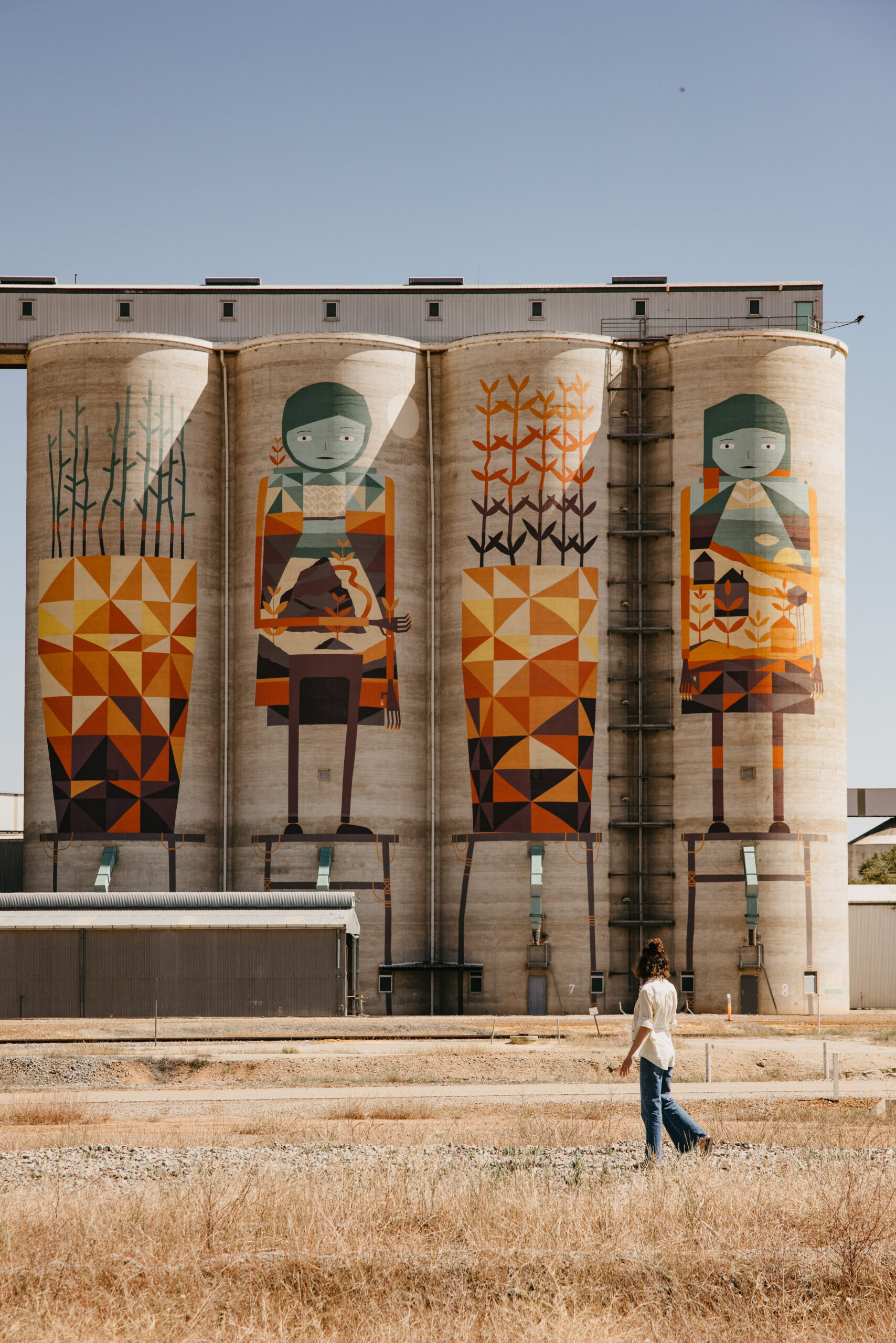
If you’ve travelled the Wheatbelt, you’ve likely encountered them: colossal grain silos transformed into vertical canvases, their surfaces alive with hyperrealist portraits, native fauna, and wildflowers. This is the PUBLIC Silo Trail, a project by FORM that has quietly revolutionised the way we encounter art in the landscape.
Across six towns – Northam, Ravensthorpe, Merredin, Albany, Newdegate, and Pingrup, with additional works scattered around Katanning – agricultural infrastructure has been reimagined as monumental storytelling. Each mural is site-specific, drawing from the histories, ecosystems, and communities that define these places.
Visible from highways and encountered by chance, these silos demand attention through their sheer scale and context. They ask you to stop, to look, to reconsider what a canvas can be.
7. Collie Mural Trail
If you find yourself in the town of Collie, you’ll discover an open-air gallery that stretches from the town centre all the way out to the Wellington Dam.
There are more than forty murals here, great sweeping works painted across walls and buildings, each one holding a story representing the place. Some celebrate the coal mining heritage, others pay tribute to the local characters who’ve shaped the town’s spirit over generations.
There’s a mural at the Anglican Church that dates back to 1922, painted by an artist named Philip Goatcher. And then there are brand new works, completed just a few years ago in 2020 and 2021 by contemporary Western Australian artists. The centrepiece, “Reflections”, is a giant mural painted across the Wellington Dam wall, by Guido van Helton. At 8,000 square metres, it’s absolutely monumental.
You can follow a trail map at your own pace, or if you’d like some company and context, Forest Explorers run guided walks. Pick up a map from the Collie Visitor Centre or the Kiosk at the Dam, and give yourself permission to get wonderfully lost in this painted landscape.
8. Boot Mile – Narembeen
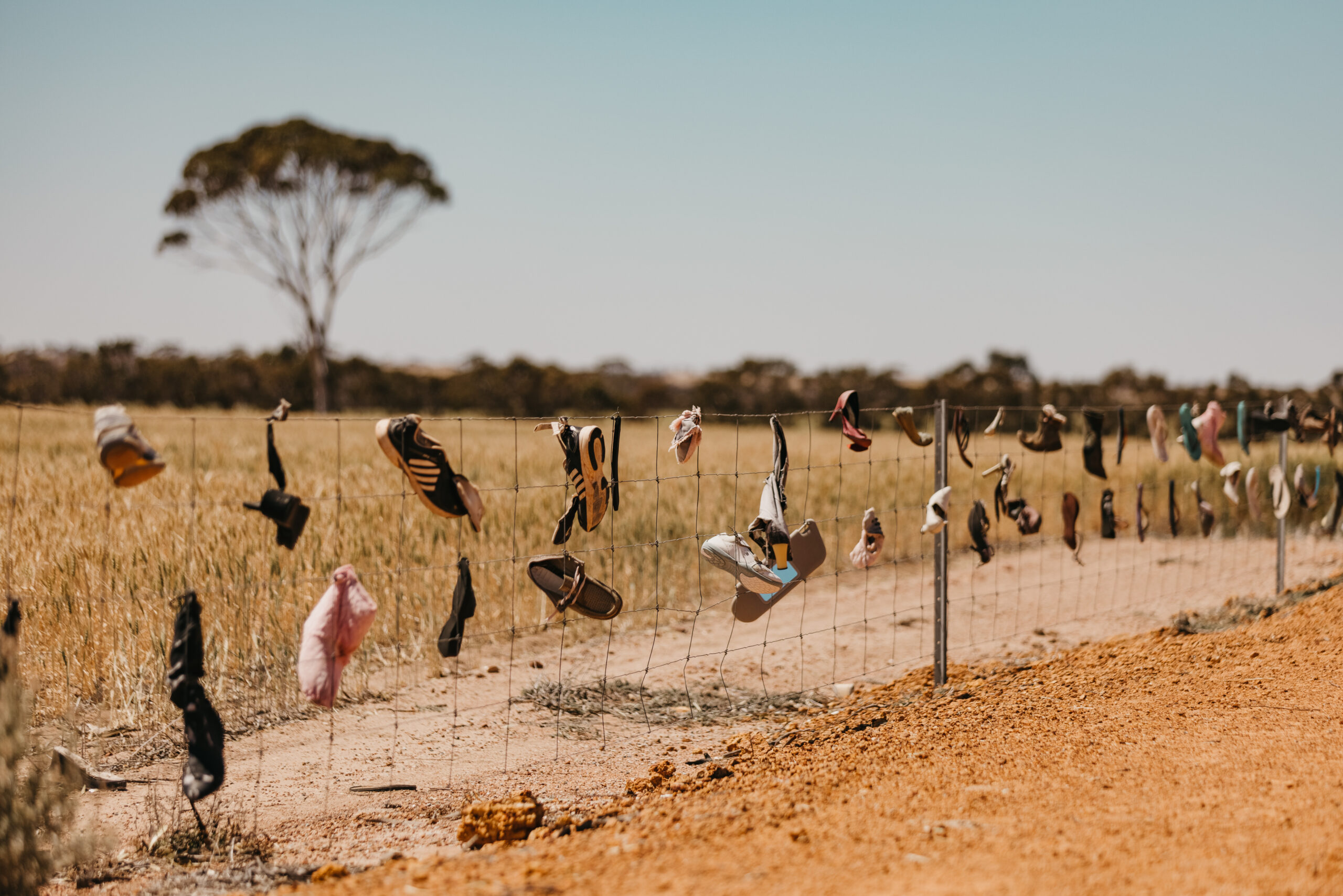
Along Mt Walker Road near Narembeen there are hundreds upon hundreds of boots and shoes, strung along a barbed wire fence like a weathered rosary.
This is the Boot Mile, and it began, as many good things do, with a spark of inspiration and a semi-retired farmer with time on his hands.
Ross and Helen Fidge had seen something similar on a trip to the United States. When they returned home, Ross started hanging a few old shoes on their roadside fence. Then he put up a sign. And then, as word spread, people began leaving bags of boots by the gate—gumboots, work boots, sneakers, heels… each pair with its own story, now part of this sprawling, accidental sculpture.
The fence now stretches to a rise in the road, where Ross decided to call it quits. For good measure, he added an old country dunny at the end, making the whole thing even more quintessentially Australian.
It’s folk art in its purest form: unpretentious, participatory, and deeply tied to place. If you’re driving through the Wheatbelt, pull over, take a walk along the fence, and marvel at what happens when someone decides to make the roadside a little stranger and a little more human.
9. Rock Art – Kimberley
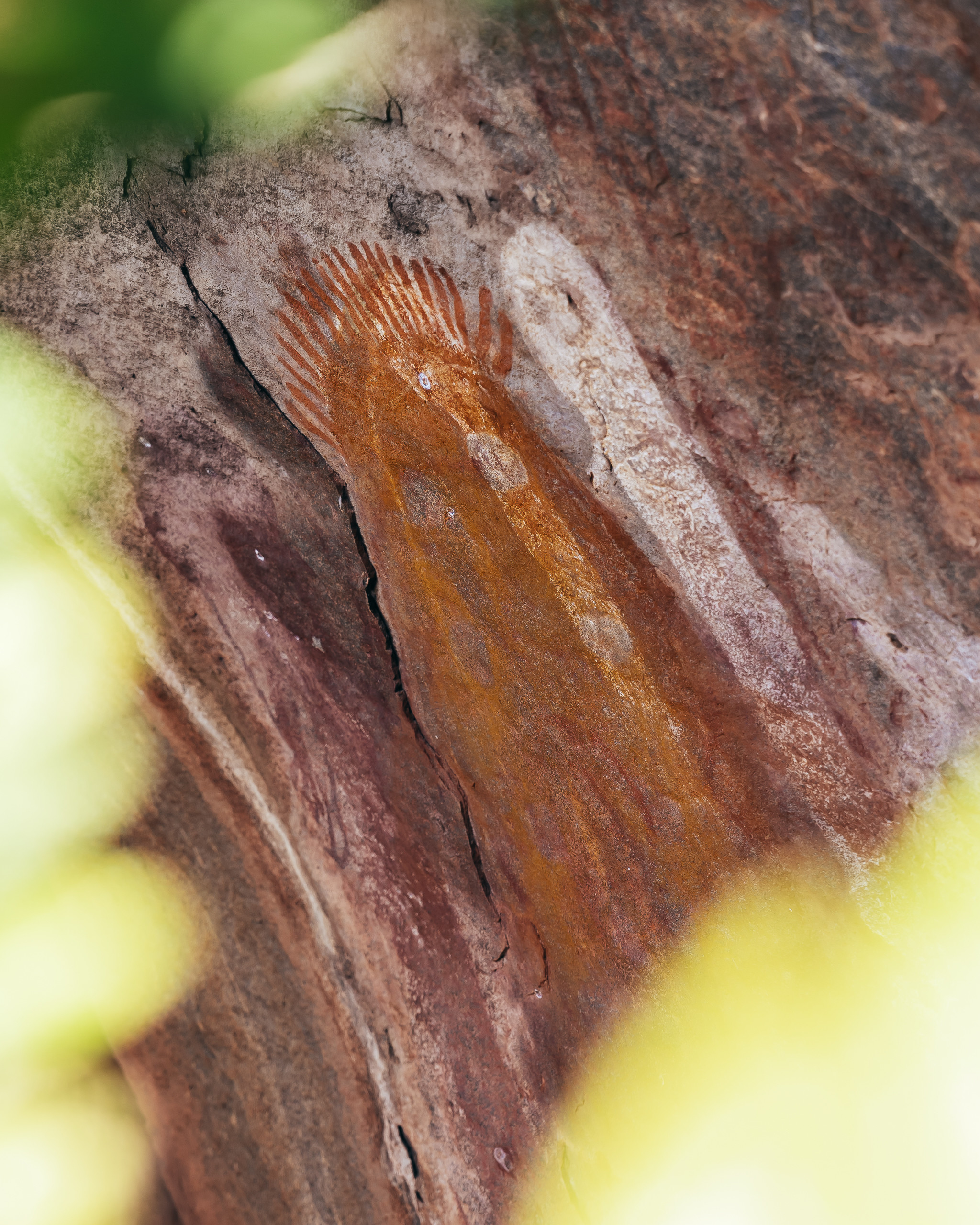
If you want to experience some of the oldest public art, head to the Kimberley, where Aboriginal rock art holds some of the oldest continuous cultural expressions on earth. Here, Wandjina figures watch with wide, knowing eyes, and the delicate Gwion Gwion figures dance across ochre walls in ceremonial dress, adorned with tassels and headdresses. These rock paintings may be over 12,000 years old, though their true age belongs to the Traditional Owners who care for them.
The Uunguu Rangers and Traditional Owners at Ngauwudu (Mitchell Plateau) offer guided tours through the Munurru Rock Art Sites. Tours run for around 1–1.5 hours and cost $25 per person. Along the Kimberley coast, expedition cruises also visit sites like Vansittart Bay, Eagle Falls, and Raft Point, while remote lodges offer their own guided excursions.
At Doon Doon, approximately 100km north of Turkey Creek, you’ll find another gateway into this living cultural landscape. The art connected to Doon Doon often features local Dreaming stories (Ngarrangkarni) about creation, ancestral journeys (like the Goolarbool Snake that carved rivers, gorges, and rock holes through the country), and the landscape itself. The campground serves as a hub for experiencing this art and culture, fostering a deeper understanding of the land through these visual stories and traditional practices.
Don’t visit these sites casually. Walk softly, guided by those whose ancestors painted them, and listen. These places are sacred. Treat them with the reverence they deserve.
10. Lake Ballard – Menzies
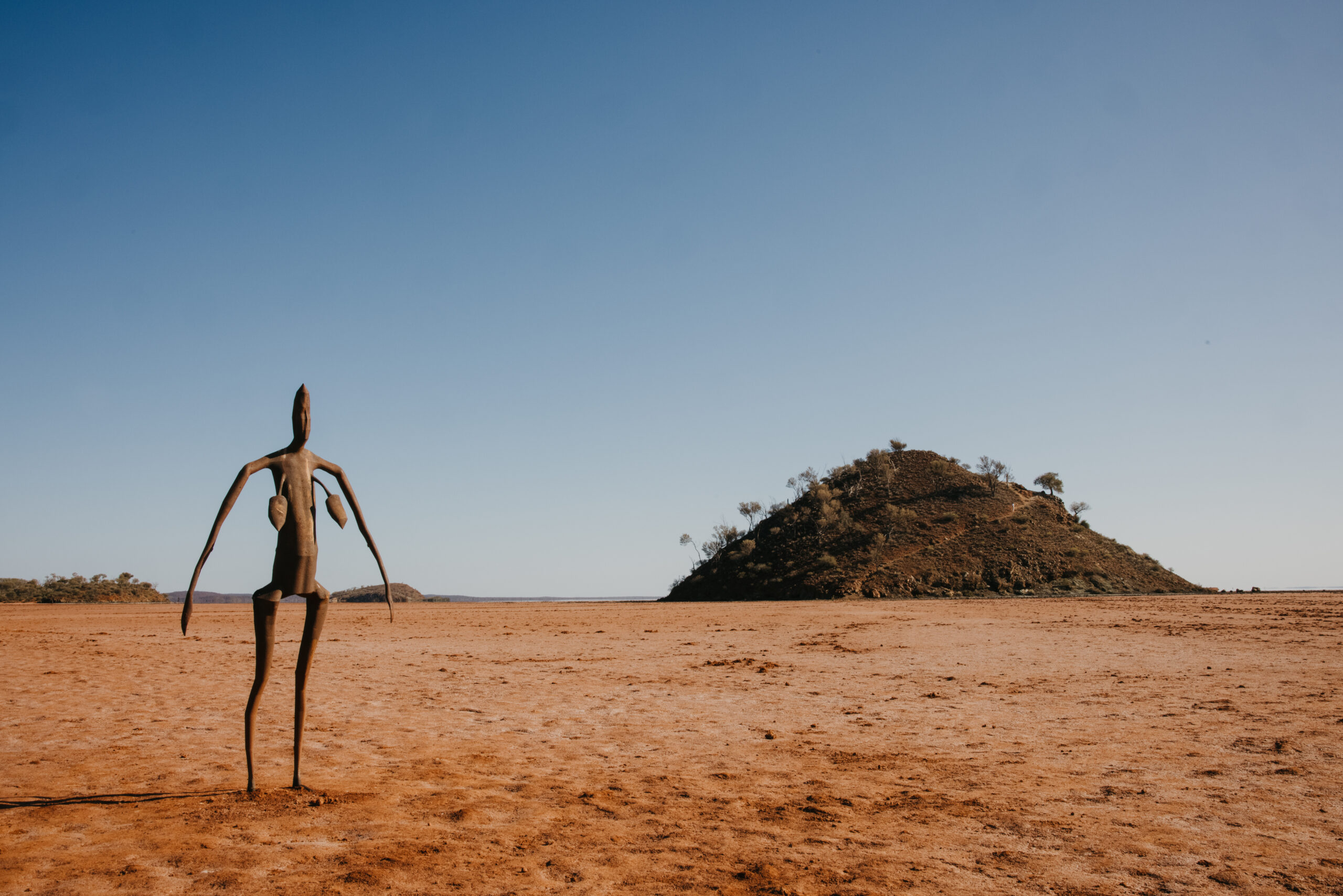
Drive east from Menzies into the shimmer and salt, and you’ll find yourself at Lake Ballard – a place where the earth flattens into something almost celestial.
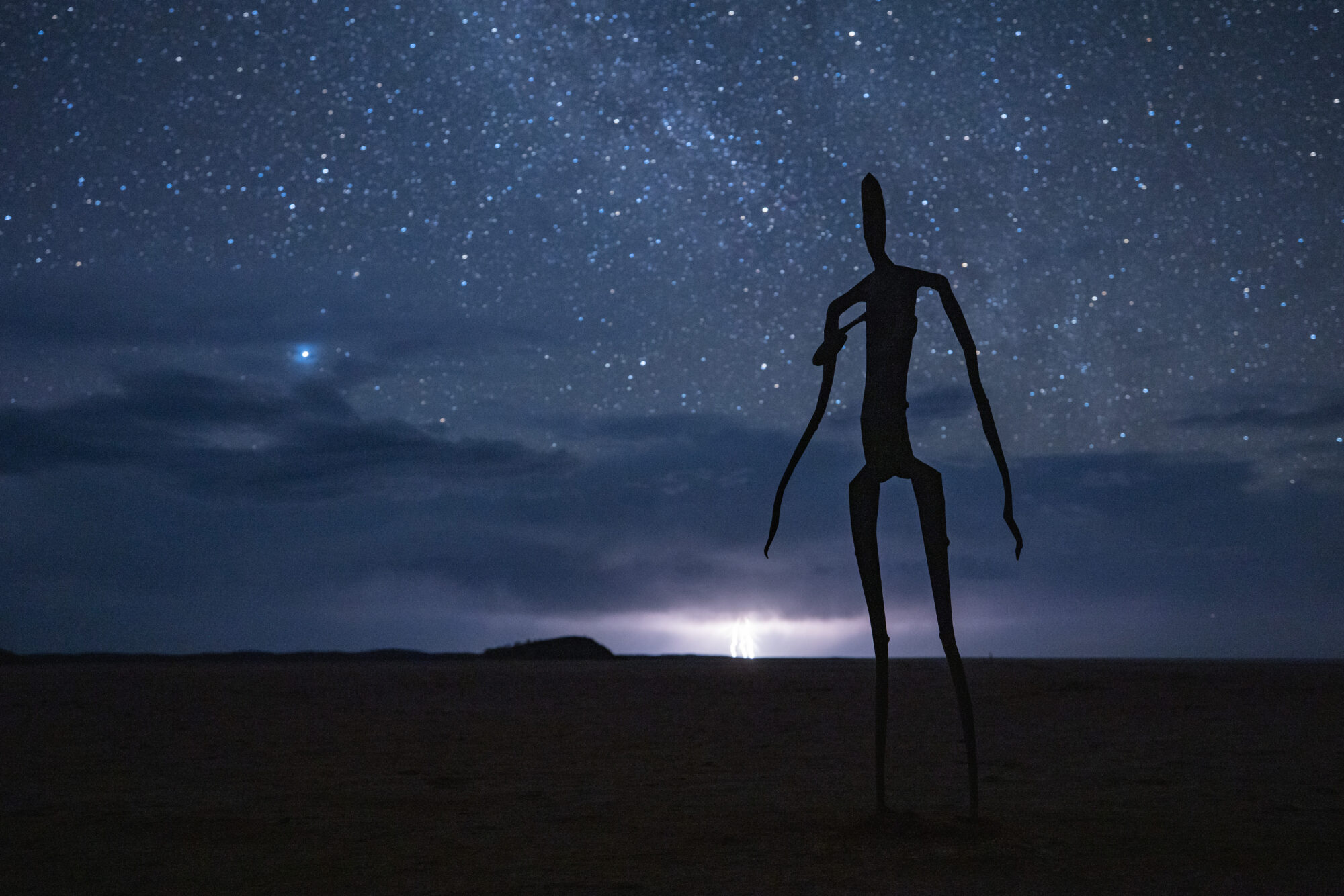
Across 10 square kilometres of salt pan, 51 iron figures stand silent and scattered. They are Antony Gormley’s Inside Australia installation, each sculpture born from a 3D laser scan of a real person from the Menzies community. Men, women and children all rendered as dark sentinels against the blinding white lake bed.
The walk is part of the experience. You move across the salt flats slowly, the crunch underfoot, the heat pressing down, the sculptures appearing and receding like mirages. Some visitors say it feels like walking on the moon. Others describe it as sacred. Both are true.
Visit at sunrise or sunset for the best light.
Posted in News & Stories, Stories.